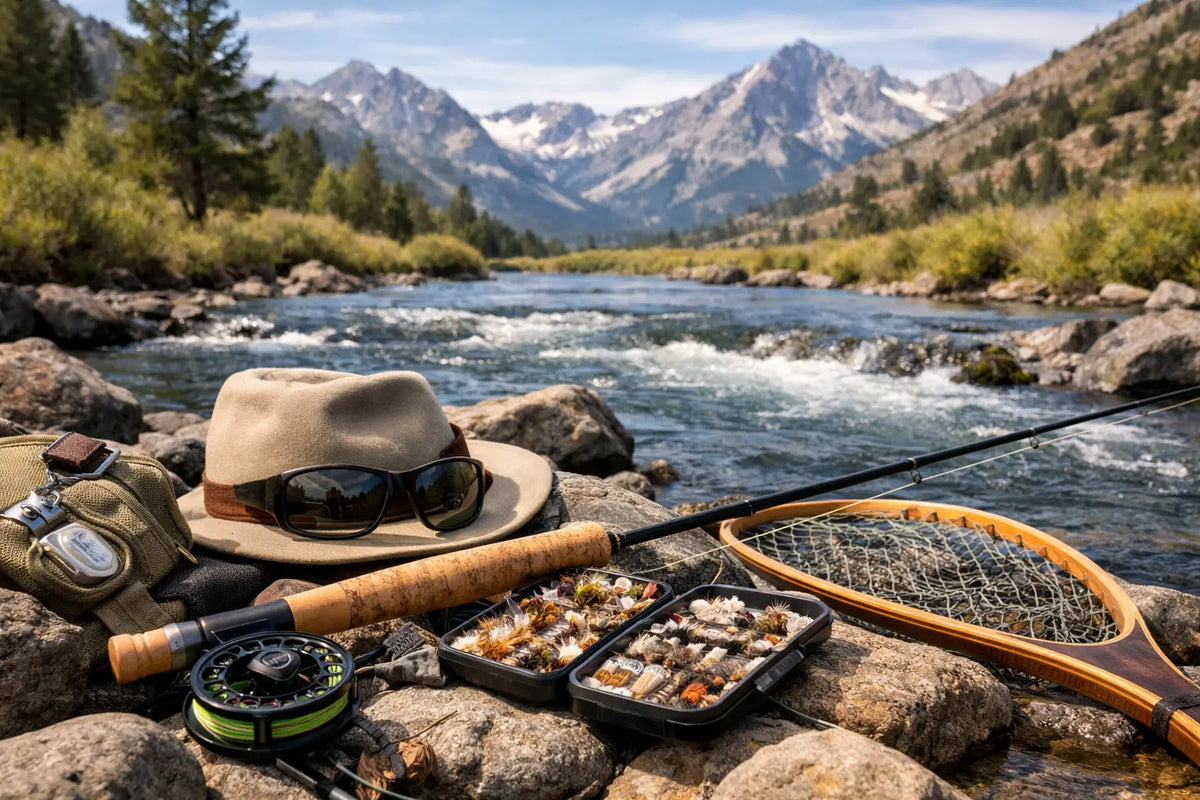
A fishing starter kit should get you from a cold garage to the water without a second round of research. That matters when the reservoir is an hour away, the river is running clear, and you have a narrow window between work, weather, and daylight.
The goal is not to own every tool in the aisle. It is to carry a few dependable pieces that work together, fit the water you fish, and give you a fair chance at your first fish. For most freshwater anglers, a spinning setup with a compact tackle selection is the right place to start.
What a fishing starter kit needs to do
A useful starter kit has one job: remove uncertainty without limiting where you can fish. It should handle stocked ponds, neighborhood lakes, mountain reservoirs, slower river seams, and shoreline access without requiring a different setup for every stop.
That means the rod, reel, line, lures, and storage should be chosen as a system. A rod that feels good with one lure but cannot cast another is not much help. A reel loaded with line that does not match the rod creates avoidable problems. A bag full of random tackle makes every first cast a guess.
The right setup is not the biggest setup. It is one you will actually pack, carry, and learn to use.
Start with one versatile spinning rod and reel
For beginning freshwater anglers, a two-piece spinning rod paired with a 2500-size spinning reel covers a lot of ground. It is light enough to cast repeatedly from shore, capable enough for trout, bass, panfish, and smaller walleye, and easy to transport in a car or strapped to a pack.
A rod around seven feet gives most people a useful balance of casting distance and control. Shorter rods can feel easier in tight brush or narrow creek corridors. Longer rods can improve casting distance on open banks. But a seven-foot rod is a practical middle ground for the varied water found across Utah and the Mountain West.
The reel matters because it should already match the rod. A 2500-size spinning reel holds enough line for open water and steady casts without making the setup feel oversized. Pre-spooled 10-pound monofilament is a sensible starting point. Mono is forgiving, visible enough to manage while learning, and useful across many common freshwater situations.
There are trade-offs. Light line can cast small lures farther and feel more subtle in clear water, but it is less forgiving around rocks and brush. Heavier line offers more abrasion resistance but can reduce casting distance with light tackle. Ten-pound mono sits in the middle well for an all-around first setup.
Keep tackle narrow and intentional
New anglers often get handed a plastic box packed with dozens of lure styles. It looks like value. On the water, it can become indecision.
You do not need to understand every lure category before you fish. You need a small selection that covers the conditions you are likely to face. Inline spinners, swimbaits, and soft plastics form a strong starting group because they fish differently without demanding complicated rigs.
Inline spinners for active water
Inline spinners are a reliable choice for moving water, stocked trout ponds, and shoreline trout fishing. Their blade creates flash and vibration as you retrieve, giving fish an easy target in broken current or low light.
Cast slightly upstream or across current, then retrieve just fast enough to feel the blade turn. In a pond or reservoir, make a long cast, let the spinner sink for a few seconds, and retrieve at a steady pace. If you stop feeling vibration, speed up slightly.
Spinners can twist line after repeated use, especially when anglers retrieve too slowly. Check your line regularly and replace it when it looks coiled or worn. This is normal maintenance, not a failure of the setup.
Swimbaits for covering open water
Swimbaits bring a simple baitfish profile to the kit. They are effective when fish are feeding along reservoir points, lake edges, weed lines, or rocky shorelines. A steady retrieve often does the work.
Let a swimbait fall long enough to reach the depth where fish may be holding, then retrieve with the rod tip low. Vary your pace before changing lures. Often, a slower retrieve or a brief pause is enough to get a follow to turn into a strike.
Use swimbaits when you want to cover water efficiently. They are especially useful on larger reservoirs where fish may be spread out and the shoreline changes quickly from shallow rock to deeper water.
Soft plastics when fish want a slower look
Soft plastics are less about covering ground and more about working likely holding areas. Fish them near rocks, along bank-side cover, through slower pools, or around the edges of aquatic vegetation.
A simple cast, sink, and slow retrieve is enough to begin. Add small lifts with the rod tip, then let the bait fall again. Do not overwork it. In cold water or after heavy fishing pressure, a slower presentation can be the better choice.
Soft plastics require a little more attention than a spinner, but they teach an essential lesson: fish do not always chase. Sometimes the right move is to put a bait near cover and give it time.
Carry only what supports the day
A compact fishing bag changes how often you actually go. It keeps the essentials together, leaves your hands free on uneven banks, and stops loose tackle from taking over your vehicle.
Pack your rod and reel, a small tackle box, spare line or a few replacement leaders, pliers or forceps, line cutters, and a small first-aid kit. Add water, sunscreen, a light layer, and your required fishing license. Conditions in the West can change fast, even on a short outing.
Avoid loading the bag with gear you have not learned to use. A heavy pack does not make you more prepared if it slows you down at the shoreline. Start with a system you can understand at a glance.
NIVARO's First Cast Kit follows that approach: a coordinated rod, reel, line, sling, and focused tackle selection built for anglers who would rather fish than compare parts.
Rig before you leave home
The first ten minutes at the water are often where a new angler loses momentum. Wind is up, fingers are cold, and a loose knot becomes harder than it should be. Rigging at home removes that friction.
Practice one dependable knot until you can tie it without rushing. The improved clinch knot is a common starting option for tying a lure directly to monofilament. Wet the knot before pulling it tight, then test it with a firm tug. Trim the tag end close, but do not cut into the knot.
Before leaving, check that the reel bail opens and closes cleanly, the drag is set lightly, and the line is not wrapped around the rod tip. Keep the drag light enough that a strong fish can pull line without breaking it. You can tighten it gradually if needed.
Fish the water in front of you
Do not begin by casting as far as possible. Start by looking. Watch for current seams, shaded banks, submerged rocks, wind-blown shorelines, points, and changes in water color. These are places where fish may find food or hold out of the current.
In a river, fish the slower water beside faster current. In a reservoir, work along rocky banks and points before launching casts into empty water. In a pond, pay attention to corners, docks, shade, and the downwind side where food can collect.
Make purposeful casts. Cover a section of bank with a few casts at different angles and depths, then move. Repeating the same cast from the same spot rarely tells you much.
A bad day can still teach you where the water is deep, where snags collect, which retrieve feels right, and what the wind does to your line. Those lessons carry forward longer than one lucky fish.
Learn the small habits that prevent lost fish
Most beginner setbacks are simple: dull hooks, loose knots, line wrapped around the tip, or drag set too tight. Check the hook point with care. If it looks bent, rusty, or dull, replace the lure or hook. After a snag or hard strike, inspect the first few feet of line for rough spots.
When a fish strikes, do not yank immediately with all your strength. Keep steady pressure, raise the rod smoothly, and let the reel drag do its job. A fish close to shore often makes one final run. Stay calm and keep the line tight.
If you are keeping fish, know the local regulations and carry a way to handle them responsibly. If you are releasing fish, wet your hands first, support the fish gently, and return it to the water without dragging it across dry ground.
Your first kit should make leaving easy. Keep it packed, keep it simple, and put it by the door. The more often you make a few casts, the sooner every piece of the system starts to feel like second nature.