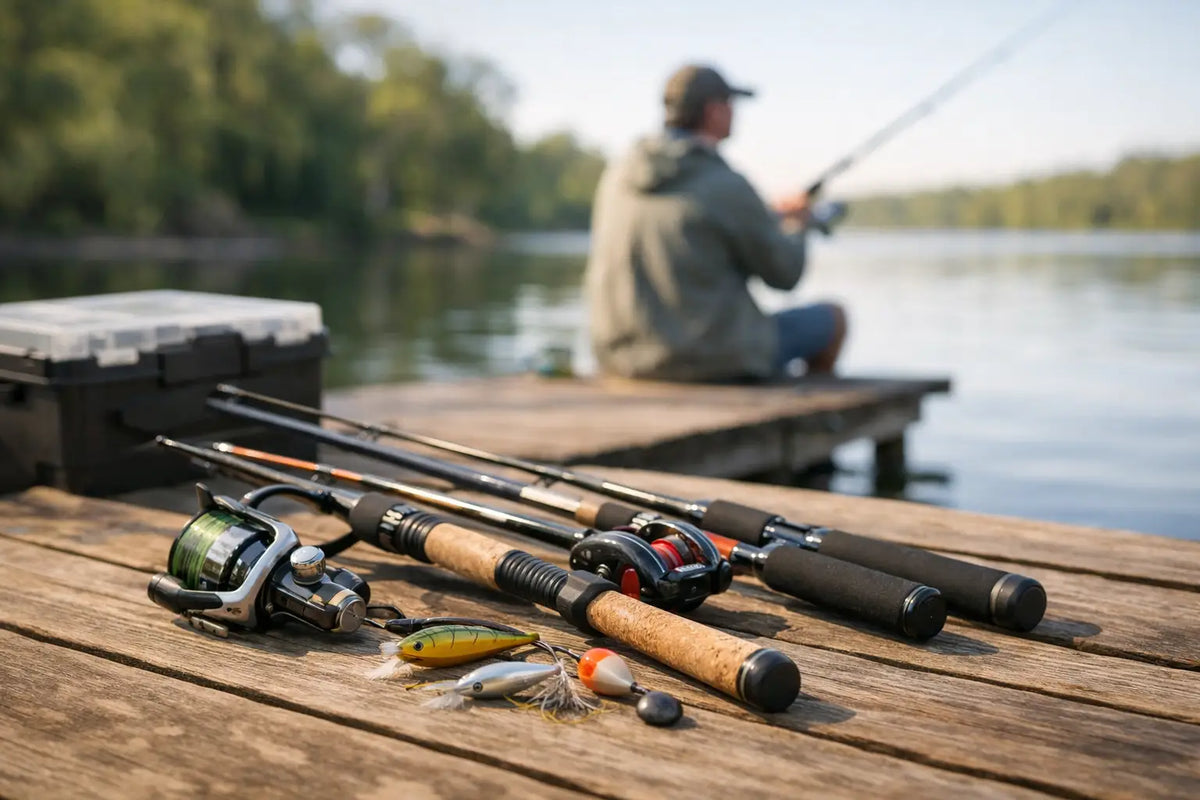
A cold morning at a Utah reservoir is a poor time to discover your new rod is too stiff for the lure you brought, too long for the bank you are standing on, or paired with a reel that does not balance. The best fishing rod for beginners is not the most technical model on the rack. It is the one that handles common freshwater situations well, packs without drama, and gives you enough feel to learn what happens below the surface.
For most new anglers, that points to one clear starting place: a 6-foot-6-inch to 7-foot spinning rod with medium-light or medium power and a fast or moderate-fast action. Pair it with a 2500-size spinning reel, sensible line, and a small selection of proven baits. You can fish a pond after work, a high-desert river on a Saturday morning, or a windy reservoir from shore without rebuilding your whole setup each time.
Why a spinning rod is the right first choice
Baitcasting gear has a place. It also asks more of a first-time angler. A spinning rod and reel are easier to cast with light lures, easier to manage in the wind, and more forgiving when your timing is still developing. The line comes off the spool with less resistance, which helps when you are throwing an inline spinner, a small swimbait, or a soft plastic from the bank.
That matters because beginners need repetitions. A setup that casts cleanly lets you spend time learning where fish hold, how a lure feels as it moves, and when a bite differs from bottom or weeds. A setup that creates frequent line problems turns a good morning into a knot-untangling session.
Spinning gear also covers a broad range of freshwater species. Trout, bass, perch, crappie, bluegill, and smaller walleye are all within reach when the rod, reel, line, and lure are matched correctly. You do not need a different rod for every fish in your first season.
Best fishing rod for beginners: the useful specs
Rod labels can make a straightforward decision feel complicated. Start with length, power, and action. These three details tell you far more than a long list of marketing features.
Length: 6 feet 6 inches to 7 feet
A rod in this range is long enough to cast effectively from shore and short enough to control around brush, docks, narrow paths, and a vehicle. It also works well for anglers who hike to water or keep a setup in the truck.
A 7-foot rod is the most versatile choice when you have open room to cast. It provides a little more distance and helps you manage line when fishing from a bank above the water. A 6-foot-6-inch rod can feel more manageable if you are younger, shorter, fishing tight creeks, or working around overhanging branches.
Avoid treating extra length as an automatic upgrade. An 8-foot rod may cast farther, but it is less convenient for the water many beginners actually fish. The best first rod should earn its place on regular trips, not wait for the one situation where it is perfect.
Power: medium-light or medium
Power describes how much force it takes to bend the rod. For a general freshwater setup, medium-light and medium are the practical choices.
Medium-light power is excellent for trout, panfish, and lighter presentations. It casts small spinners and soft plastics well, protects lighter line, and makes modest fish feel lively. If most of your trips involve clear rivers, mountain lakes, and stocked trout ponds, medium-light is a strong fit.
Medium power adds backbone for bass, heavier soft plastics, larger swimbaits, and fish that pull you toward weeds or rocks. It remains light enough for everyday freshwater fishing but gives you more margin when conditions are less controlled. For an angler who wants one rod for reservoirs, ponds, rivers, and mixed species, medium is often the safest all-around choice.
The trade-off is simple. Medium-light offers more finesse with small lures. Medium handles a wider range of lure weights and more demanding cover. Neither is wrong. Choose based on the water you expect to fish most, not the biggest fish you hope to catch once.
Action: fast or moderate-fast
Action describes where the rod bends. A fast-action rod bends mostly near the tip. This makes it sensitive enough to feel light strikes and responsive enough to set a hook with a short, controlled sweep.
A moderate-fast action bends a little deeper into the blank. It can be forgiving with moving lures such as inline spinners and swimbaits, especially while you are learning to avoid pulling a lure away from a fish too quickly.
Either action works. Fast action is the more common do-it-all recommendation because it works well with soft plastics, spinners, and jigs. Moderate-fast is worth considering if you plan to fish mostly moving baits and prefer a slightly softer feel. Skip an extra-fast rod for your first setup unless you already know you will focus on a narrow technique. Specialized gear can wait.
A rod is only as useful as its reel and line
An excellent rod paired with the wrong reel is still a frustrating tool. A 2500-size spinning reel is the natural match for a 6-foot-6-inch or 7-foot freshwater rod. It holds enough line for long casts, balances well in hand, and is not so large that it makes light fishing feel clumsy.
For general use, 8- to 10-pound monofilament line is a dependable place to start. Mono is affordable, manageable, and forgiving while you learn knots and casting. Ten-pound line is especially practical around reservoir rocks, brush, and the occasional larger bass. Lighter line can help with cautious trout in very clear water, while heavier line makes sense around dense cover, but neither adjustment needs to define your first purchase.
Balance matters more than many first-time buyers expect. Hold the rod and reel together if possible. The setup should not feel tip-heavy or awkward at the grip. When a rod feels balanced, casting stays relaxed and you can work a lure longer without tiring your wrist.
Two-piece rods make more trips possible
A one-piece rod has a reputation for being the purist's choice, but portability is a real performance feature when you live an active outdoor life. A two-piece rod fits more easily in a car, packs into a cabin or campsite, and travels cleanly to water that is not directly off the highway.
Modern two-piece spinning rods are fully capable for beginner freshwater fishing. The practical question is not whether a one-piece rod may offer a slight advantage in a controlled comparison. It is whether you will carry it, store it, and use it often. A rod that travels easily is a rod that gets you on the water.
That is why a coordinated system like the NIVARO Rogue 7 two-piece spinning rod, pre-matched 2500 reel, and 10-pound mono line makes sense for a first setup. The critical decisions are already handled, leaving you to learn the parts of fishing that cannot be solved from a product page: reading the weather, choosing a bank, and making another cast.
Do not buy your first rod for a single technique
The fastest way to create clutter is to buy a rod around one lure before you understand how you like to fish. A dedicated drop-shot rod, heavy frog rod, ultralight trout rod, or long surf rod can all be useful later. They are not the right first answer for most freshwater anglers.
Start with a rod that can throw a compact inline spinner along a current seam, retrieve a small swimbait across a point, or work a soft plastic near a dock. Those three lure categories teach useful skills. Spinners help you understand speed and current. Swimbaits build confidence with steady retrieves. Soft plastics teach you to feel the bottom and recognize subtle bites.
Check the lure-weight rating printed above the rod handle. A versatile beginner rod should comfortably cover the lures you plan to use most often. Do not routinely cast outside that range. Going too light reduces casting control, while going too heavy can damage the rod and makes accuracy harder.
What to avoid when buying a first rod
Avoid ultra-cheap combos with vague specifications and poorly matched components. Low price can be useful, but a reel that twists line or a rod with a weak handle connection costs more in lost time than it saves at checkout.
Also avoid oversized reels, heavy rods, and complicated tackle bundles. More gear does not create more readiness. It often creates more decisions at the shoreline, where you should be watching wind direction, water clarity, and likely fish cover.
Finally, do not confuse sensitivity with stiffness. A rod that feels rigid in the store may not cast lighter lures well or protect light line when a fish runs. A capable beginner rod should feel controlled, not harsh.
The right first rod gives you a reason to take the long road to a new reservoir, stop at the local pond for an hour, or fish the last light on a river bend. Keep the setup simple, learn it well, and let time on the water tell you what specialized gear is worth adding later.