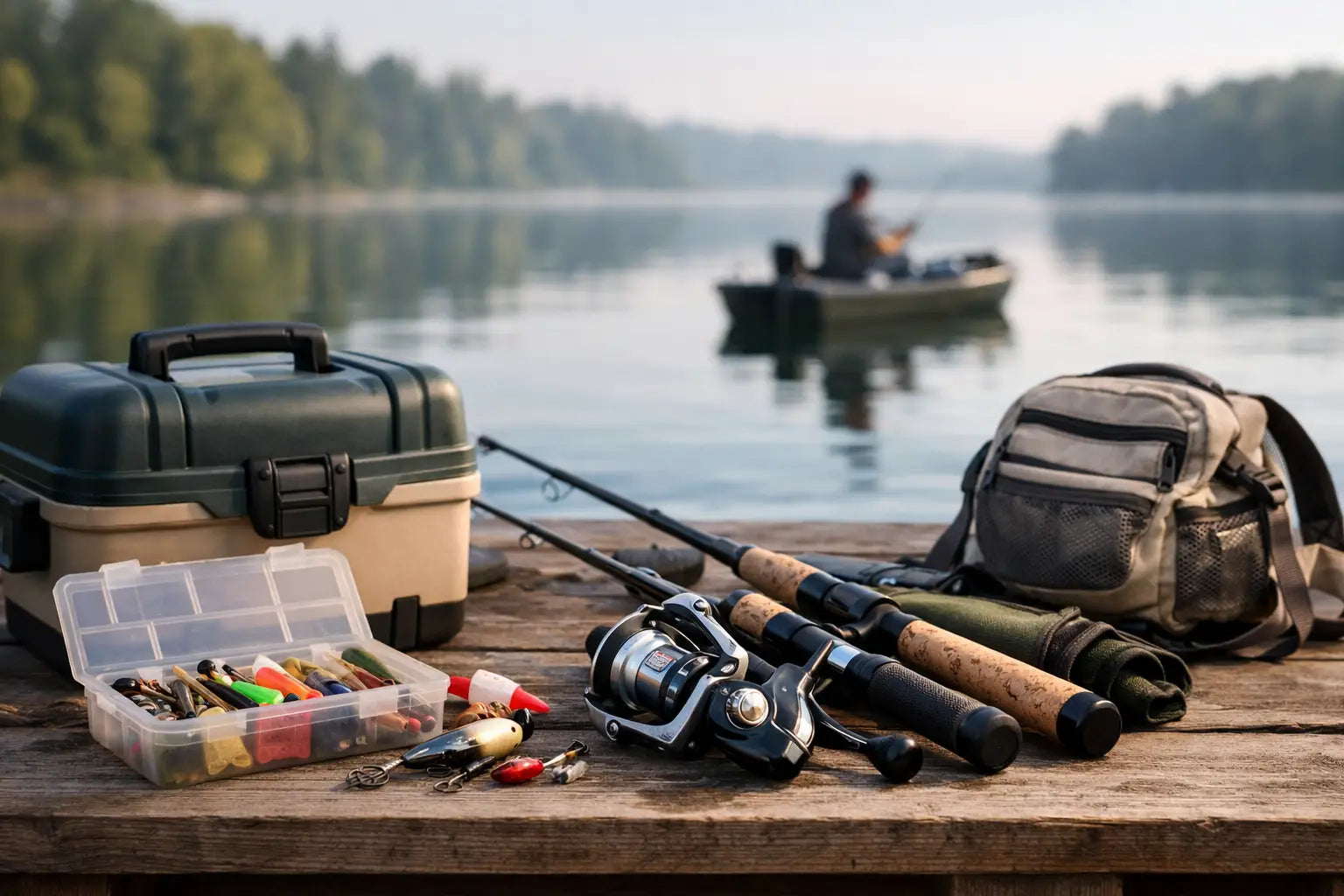
A cold morning at the reservoir is a bad time to discover your rod, reel, line, and lures do not belong together. Good beginner fishing gear removes that problem before you leave the driveway. You need a setup that travels well, rigs quickly, and gives you a fair shot at the fish in front of you.
That does not mean buying a garage full of equipment. It means choosing a few pieces that cover the freshwater fishing most people actually do: ponds after work, a quiet bend in the river, a family trip to the lake, or a long Saturday at a Western reservoir. Not more gear. The right gear.
Start With a Matched Rod and Reel
A spinning setup is the clear starting point for most freshwater anglers. It is easy to cast, handles a useful range of lures and baits, and works whether you are standing on a pond bank or walking a rocky shoreline. You will see other setups eventually. You do not need them for your first season.
For a versatile first rod, look for a medium-power spinning rod around 6 feet 6 inches to 7 feet long. That range has enough length to cast from shore while staying manageable around brush, docks, and tight riverbanks. A two-piece rod is especially practical for anglers who keep gear in a truck, pack it for a road trip, or hike into smaller water.
Pair it with a 2500-size spinning reel. This is a useful middle ground: large enough to manage 8- to 10-pound line and cast comfortably, yet light enough that an afternoon of fishing does not feel like work. More specialized reels have a place, but a 2500 is hard to outgrow when you fish bass, trout, panfish, and the occasional walleye in freshwater.
The important part is the match. A rod that is too heavy for the reel feels awkward. A tiny reel loaded with thick line creates casting problems. A balanced combination lets you focus on the cast, the retrieve, and the water instead of fighting your equipment.
Keep Your First Line Simple
Ten-pound monofilament is a sound place to begin. Mono is forgiving, affordable, and easy to tie. It also has some stretch, which helps when a fish makes a sudden run or when your hookset is still a work in progress.
Braided line is strong for its diameter and useful around heavy cover, but it can make early mistakes more obvious. Fluorocarbon has value in clear water, yet it is less forgiving to manage and costs more. Neither is wrong. They are simply not required to start catching fish.
Check your line before every trip. Run it through your fingers for rough spots, cuts, or tight coils. If it looks worn, replace it. Fresh line is one of the least expensive ways to avoid losing a lure or a fish.
Beginner Fishing Gear Needs a Small, Working Tackle Plan
The tackle aisle can make fishing look like a complicated decision tree. It is not. Start with a small group of lures that cover different water conditions and let you learn what fish respond to.
An inline spinner is a strong choice when you need flash, vibration, and an easy retrieve. Cast it, let it sink for a moment if the water is deeper, then retrieve steadily enough to feel the blade working. Spinners are effective in moving water and around lake shorelines, especially when fish are actively feeding.
Swimbaits handle a different job. Their natural profile and tail action make them useful when bass, walleye, or larger trout are chasing baitfish. Fish them on a steady retrieve or let them sink before bringing them through the depth where you expect fish to hold.
Soft plastics earn their place because they can be fished slowly. A small worm, grub, or creature-style bait can reach fish that ignore a fast-moving lure. Rig one on an appropriate hook or jighead, work it with short pulls, then give it time to rest. Many beginners retrieve too quickly. A pause often does more than another cast.
You do not need ten colors of every lure. Begin with a few natural baitfish colors, a darker option for low light or stained water, and one brighter choice for visibility. As you spend time on the water, local conditions will tell you what to add.
A compact tackle selection also makes it easier to learn. When you have three proven lure types instead of thirty unopened packages, you can pay attention to where you cast, how fast you retrieve, and when fish respond. That is how confidence is built.
The Small Tools That Keep a Trip Moving
A functional fishing bag matters because loose gear has a way of disappearing when the wind comes up or the bite starts. Choose a compact sling or shoulder bag that holds a small tackle box, spare line, tools, water, and a light layer. It should stay close to your body while you walk a bank, but not become a piece of luggage.
Carry needle-nose pliers or a hook-removal tool, line cutters, and a few spare hooks or jigheads. A tape measure is useful if your water has size regulations or if you want an honest record of a good fish. Add sunscreen, a hat, and a small first-aid kit when you are heading farther from the truck.
Keep your kit organized by use, not by category. Put the lures you expect to fish first where you can reach them quickly. Keep tools in the same pocket every time. Stow the rest. A clean bag means less time digging through plastic and more time watching the water.
Match the Setup to the Water, Not the Marketing
A single well-chosen setup can cover a lot of ground, but conditions still matter. In a shallow pond with bluegill or small bass, a light spinner or soft plastic may be all you need. On a windy reservoir point, you may choose a slightly heavier swimbait so you can cast farther and keep contact with it.
Rivers require another adjustment. Current puts pressure on your line and moves your lure quickly. Cast slightly upstream or across the current, then retrieve just fast enough to keep the lure working. In clear mountain water, use quieter presentations and take care not to stand directly over the fish. On stained water after rain, a spinner’s vibration can help fish locate it.
Weather changes the plan, too. Cold fronts can slow fish down. High sun can push them toward shade, deeper water, or cover. Wind can make casting difficult, but it can also stack food along a bank and create a productive shoreline. There is no lure that solves every condition. The advantage comes from having a few capable choices and using them deliberately.
Practice Before You Need the Cast
Do not make your first cast of the trip the first cast you have ever made. Spend 15 minutes in an open patch of grass with a practice plug or a lure with the hooks removed. Learn to open the bail, hold the line against the rod with one finger, release at the right point, then close the bail by hand after the lure lands.
Accuracy matters more than distance at first. Aim for the edge of a weed line, the shadow beside a dock, a rock seam, or a patch of calmer water near current. Fish often hold where one type of water meets another. Repeated, controlled casts to likely water beat wild casts to the middle of nowhere.
Learn two dependable knots: an improved clinch knot for tying lures and a simple loop knot if you want a little more lure action. Wet the line before you tighten either knot. Then pull firmly and trim the tag end close. A poorly tied knot can turn a good strike into a story about the one that got away.
Buy for the Trips You Will Actually Take
There is a difference between being prepared and being overloaded. If most of your fishing happens from shore at local lakes, do not build a boat angler’s tackle system. If you travel light into mountain streams, portability should carry more weight than extra storage. Your first setup should fit your real routine.
That is the thinking behind a coordinated system such as the NIVARO First Cast Kit: a two-piece spinning rod, pre-matched 2500 reel with 10-pound mono, compact sling bag, and a focused tackle selection built to work together. The value is not in collecting components. It is in leaving home ready to fish.
Before any trip, confirm that you have the required fishing license and know the local rules for seasons, species, size limits, and bait restrictions. Those details vary by water and change over time. Respect the access point, pack out discarded line and packaging, and give other anglers room.
The best first kit is the one you can grab when the weather breaks, the road opens up, and there are still a few hours of light on the water. Keep it simple, keep it maintained, and let the next cast teach you what to do after that.